Audio
Audio Shorts
 Movies & Games
 Blog & Stories
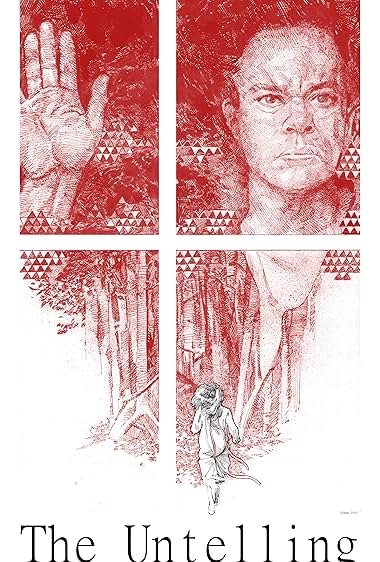
The old house on Oakhaven Lane had always held its breath. Not with anticipation, but with a deep, settled dread. Elias, a man whose beard had more gray than brown, inherited it from a distant aunt, a woman he’d never met. He moved in with his wife, Clara, and their daughter, Lily, a child with eyes too wide for her tiny face. The locals spoke in hushed tones of the property’s past, of a farmer named Silas who, in the summer of ’68, had succumbed to a madness that saw him butcher his entire family. Their final resting place, they whispered, was a newly dug pit in the root cellar, still beneath the house.
One stifling August afternoon, Clara took Lily to a specialist in the next town. She’d neglected to inform Elias, who was wrestling with a stubborn plumbing issue in the damp, musty cellar. As Elias hammered away, a faint scratching sound emanated from the far corner, near the sealed-off section where Silas’s victims were allegedly buried. He dismissed it as rats, a common nuisance in such an ancient structure. He ascended the creaking wooden stairs, the smell of mildew clinging to him like a shroud.
At the top of the basement stairs, he paused. A small figure, a girl no older than Lily, sat on the landing, her knees pulled to her chest. She wore a faded, homespun dress, and her hair, a tangled mess of dark curls, obscured her face. “Water,” she rasped, her voice like dry leaves skittering across stone. Elias, unnerved but thinking it was some neighborhood child lost, nodded and went to the kitchen. He poured a glass of cool water, his hand trembling slightly. As he turned to return, the insistent ringing of the doorbell jolted him. It was Clara and Lily, back earlier than expected, having forgotten a crucial document for Lily’s appointment. Elias, distracted, set the glass of water on the edge of the dining room table. When he opened the door, Clara looked past him, her eyes widening in disbelief.
Standing on the basement landing, peering up the stairs with an unnerving stillness, was Lily. But it wasn’t Lily. The child on the landing was gaunt, her skin pulled taut over her bones, her eyesockets dark hollows. And from her mouth, a thin, dark trickle, like fresh tar, seeped onto the worn floorboards, staining them a deep, unyielding crimson. Clara let out a strangled gasp. Elias spun around, his heart a frantic drum against his ribs. The landing was empty. The scratching from the cellar had stopped. But the stain on the floorboards, where the child had sat, seemed to deepen, to pulse with a life of its own, a silent testament to what Silas had done, and what the house refused to forget.