Audio
Audio Shorts
 Movies & Games
 Blog & Stories
It was the first truly warm day of the year, the kind that makes you forget the gray months. I was walking home from the market, a canvas bag of oranges bumping against my hip, when I noticed the old bakery conversion on Maple Street. It wasn’t the building itself that drew my eye—it was the second-floor window, a small arched pane that had been painted shut for decades. The afternoon sun hit it at an angle, turning the glass into a sheet of amber, and for a moment I thought I saw a face.
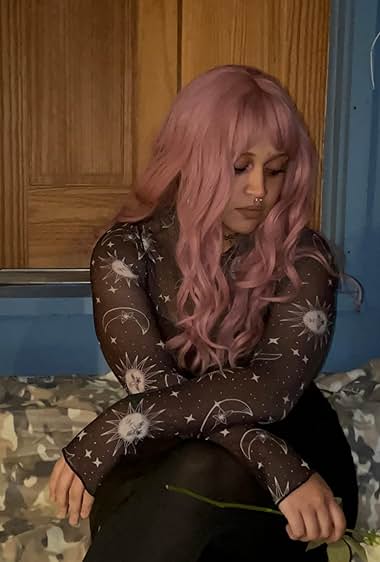
I stopped, squinting. The face was there, pressed close to the glass, almost filling the entire frame. It was a woman, young, maybe early thirties. Her skin was the color of weak tea, and her hair was a wild tangle of dark curls that spilled over her shoulders like a waterfall caught in freeze-frame. But it was her eyes that unsettled me—not because they were open, but because they were closed. She was looking down, as if focused on something just below my line of sight. I felt a strange warmth bloom in my chest, not fear, but a deep, curious fascination. I must have stood there twenty seconds, maybe more, not moving, not breathing hard, just staring.
The traffic on Maple Street hummed behind me, a car horn blared somewhere, but the sound felt muffled, as if I had cotton in my ears. I was aware of the weight of the oranges in my bag, the sweat pricking the back of my neck, but my mind was wholly occupied with her. She didn’t move. Her eyes stayed shut. And then, as if a switch had been flipped, I felt a sudden urgency to check if she was still there. I blinked, and in that fraction of a second, the window was empty. The glass reflected the blue sky and the top of a sycamore tree, and the spot where her face had been was just a smudge of dust.
I stood there for another minute, waiting for her to reappear, but she didn’t. I walked on, but my feet felt heavy, and I kept glancing back over my shoulder. The building had a dusty sign that read ‘Sullivan’s Bakery, est. 1923,’ but the storefront was boarded up, and a chain link fence surrounded the trash-strewn yard. I remember thinking: who lives there? Could a squatter have managed to get into a boarded-up bakery? But the window was high up, and there was no way to see in from the street. I shrugged it off, telling myself it was a shadow or a trick of the light, but the image of her closed eyes stayed with me, stuck like a burr in my mind.
That night, I couldn’t sleep. I lay in bed, staring at the ceiling, replaying the moment over and over. Why did she look so peaceful? Why did I feel so warm? I Googled the address when I got home, but the search returned nothing except a real estate listing from five years ago that described the property as ‘historically significant but in need of major renovation.’ I found an old newspaper article from 1985 about a fire in the building, but the details were scant: a small fire in the kitchen, no injuries, closed for a month.
A week later, I was passing the bakery again, and I couldn’t help but slow down. The window was still blank, the glass now gray with overcast sky. I had just about decided it was a delusion when I noticed a small detail I had missed: a faint outline of a handprint on the inside of the pane, as if someone had pressed their palm against the glass for a long time. The print was too small for a man’s hand, but it was too old to be fresh. I tried to wipe it from my mind, but it stuck.
Over the next month, I found myself walking past the bakery every day, always at the same time. I didn’t see her again, but I felt her presence like a held breath. I started to research the building’s history more deeply, visiting the local library and digging through old city records. I discovered that the bakery had been owned by a family named O’Rourke, and that the daughter, Maeve, had been a recluse who never left the building after the 1985 fire. She had died in 1991, and her body wasn’t found for weeks because she had been living in a small apartment above the bakery, and no one had heard from her. The coroner’s report noted that she was thirty-four, with dark curly hair, and that her eyes had been closed—the cause of death was a peaceful heart attack.
My blood ran cold when I read that. I remember staring at the faded photocopy, my hands trembling. Could it be that I had seen Maeve O’Rourke, standing at the window where she had spent her last days, looking out with closed eyes? I tried to rationalize it: maybe I had absorbed a memory from a movie, or maybe the power of suggestion. But the feeling was too real, the warmth in my chest too familiar. I couldn’t shake it.
Now, months later, it’s autumn, and the leaves are falling from the sycamore tree that shadows the bakery. I still walk past, but I no longer stop. Sometimes, out of the corner of my eye, I catch a glimpse of something in that window, but when I turn my head, it’s gone. I’ve started to avoid that street, taking the long way home, but I find myself dreaming of her, standing in the amber light, her eyes closed, looking down at something I can’t see. I wonder if she’s waiting for me to understand, to acknowledge that she was real, that her presence mattered. And I wonder if, one day, I’ll close my eyes and feel that same warm curiosity, and find myself standing at the window, looking out at the world with a peaceful smile, waiting for someone to look up and see me.
I don’t know why I was chosen to see her, or why she chose to appear to me. But I know this: every time I pass that building, I feel a pull, a gentle tug at my heart, telling me that she is still there, still watching, still waiting. And I’m learning to accept that some stories don’t end. They just wait for their next chapter.