Audio
 Shorts
 Movies & Games
 Blog & Stories
The summer Dad left, Mom packed up our lives into a rusted Ford and drove us to the far edge of Morgan County, where the land flattened into a checkerboard of sugar beet fields and the sky pressed down like a wet wool blanket. The house was a two-story saltbox with a wraparound porch that sagged on its beams like a tired old woman. It had been empty for years, and the realtor had warned Mom about the well going dry and the wiring being shot. But rent was cheap, and Mom was desperate.
My brother, Danny, was fifteen then, and he took to the house like a fish to polluted water. He claimed the attic for his own, stringing up Christmas lights and old band posters, and he’d disappear up there with his friend Marcus for hours, the floorboards creaking overhead like a ship at sea. I was twelve, and with Mom working double shifts at the county clinic, I was left to my own devices. I’d roam the fields, collecting arrowheads and dried corn husks, or I’d sit on the porch swing, counting the crows that lined the fence like black notes on a musical staff.
But the house had a way of making itself known. It started with the wallpaper in the hallway—a pattern of faded morning glories that seemed to shift when you passed. I’d catch a glimpse of a darker shape behind the vines, but when I turned, it was just the plaster. Then there were the footsteps in the attic when Danny wasn’t home—slow, deliberate, like someone pacing out a room they were about to rent. I’d hear them from the kitchen, and I’d hold my breath, waiting for them to stop, but they never did. They just moved from one corner to the other, back and forth, like a prisoner in a cell.
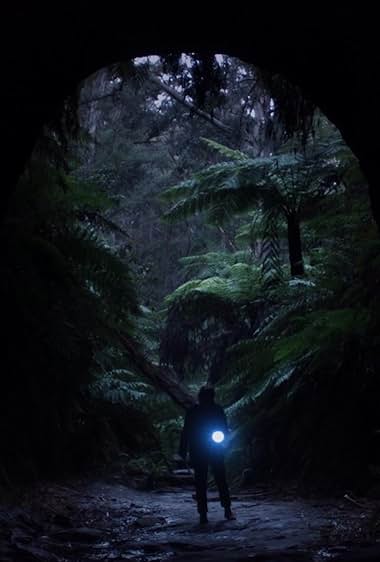
One evening, when the sky had turned the color of a bruised plum, I was in the pantry looking for a jar of pickles when I noticed the door at the back of the stairs. It was a narrow door, painted the same white as the wainscoting, and I’d never really noticed it before because a cabinet had been pushed against it. But that evening, the cabinet was slightly ajar, and the door behind it was open a crack. A smell came out—not dust or rot, but something sweet, like molasses and old apples. I pushed the cabinet aside, and the door swung open to reveal a set of stairs leading down into the dark.
I should have closed it and gone to bed. But the smell was so inviting, and the house was so quiet, that I found my feet moving before I could think. Each step creaked, and the air grew cooler, and soon I was in a cellar that wasn’t like the dirt-floored basement I’d been in before. This one had walls of rough-hewn timbers, and along one wall were shelves of mason jars, filled with something dark and thick. The jars were labeled in an old-fashioned script: ‘BEET SYRUP, 1937.’ At the end of the room was a black potbelly stove, and sitting on top of it was a tin cup, still warm to the touch.
I heard a noise behind me, like a low, wet breathing. I spun around, but there was nothing there. The stairs I’d come down were gone. Instead, there was a hallway I hadn’t noticed, leading deeper into the earth. My heart was thumping so hard I could feel it in my throat, but something pushed me forward. The hallway was lined with old photographs—sepia-toned portraits of people with hollow eyes. I recognized the house in the background, but it looked newer, the porch intact, the fields freshly tilled. The last photograph was of a man with a mustache, holding a child’s hand. They were both smiling, but their eyes were dark, and the man’s face was smudged, like someone had tried to erase him.
I turned to run, and that’s when I saw the Warden. He was tall, taller than any man I’d ever seen, and he wore a long coat made of some dark leather. His face was a blur, like he was constantly shifting, and his hands were too long, with fingers that bent at odd angles. He stood at the end of the hallway, blocking the exit I knew I hadn’t found yet. And he spoke, not with a voice, but with a vibration that I felt in my chest: ‘You’ve come to tour the fields.’
I wanted to scream, but my throat was frozen. The Warden gestured to a door I hadn’t noticed, and it swung open to reveal a vast, moonlit field. The sugar beets were taller than me, their leaves rustling in a wind I couldn’t feel. And among the rows, I saw figures—men, women, children—all bent over, pulling weeds, their movements slow and mechanical. They wore old-fashioned clothes, and their faces were blank. One of them looked up, and I saw it was my father, but his eyes were milky, and he didn’t recognize me. He just went back to his work.
The Warden stepped closer, and I felt his breath on my neck, cold and dry. ‘They made their choice to leave,’ he said. ‘Now they tend the soil.’ I heard the cabinet door slam shut behind me, and the house above was suddenly silent. I knew then that I’d have to work to get back, that I’d have to prove I wasn’t a deserter. The Warden handed me a curved blade, its edge covered in dark stains. The field stretched on forever, and the moon was high.
I don’t know how long I worked. Time lost its meaning. I pulled weeds until my hands bled, and I watched the figures around me, hoping to find a way out. But whenever I strayed too far from my row, the Warden would appear, his face shifting like smoke, and he’d point me back. I tried to speak to my father, but he just kept pulling, his fingers stained with soil. I tried to remember the way back to the house, but every row looked the same.
Then one night, the moon turned red, and the Warden called us all to the center of the field. He stood on a raised platform, addressing the hundred or so of us who toiled. ‘The beet harvest is complete,’ he said, his voice echoing through the fog. ‘But the soil is hungry. We must have new hands.’ And as he spoke, the sky split open, and a ladder of light descended. I saw a boy—about my age—walking down it, dazed, as if in a dream. I recognized him as the new kid from town, the one who had moved in down the road. The Warden took his hand and led him to an empty row, and the boy began to pull weeds, his eyes glazing over.
I knew then that I had to escape, or I’d be trapped here forever, not just working, but being replaced myself. I waited until the Warden was occupied with another new arrival, and I made a break for the treeline that bordered the field. I ran as fast as I could, the sugar beets whipping against my legs, and I could feel the Warden’s cold gaze on my back, but I didn’t look back. I crashed into the woods, and the moment I did, the scenery dissolved, and I was back in the cellar, standing in front of the cabinet, the stench of beets overwhelming me.
I scrambled up the stairs and slammed the cabinet door shut, then shoved a chair against it. I didn’t sleep that night. I sat on my bed, listening to the house settle, waiting for the footsteps in the attic to start again. They did, but this time they were slower, heavier, and they stopped right above my room. I pressed my ear to the ceiling, and I heard a scratching, like claws on wood. Then a voice, barely a whisper, but as clear as a bell: ‘The beets are in. The soil is ready.’
When morning came, I found Mom at the kitchen table, nursing her coffee, looking exhausted. She asked me if I’d slept well, and I just nodded. She didn’t see the dirt under my fingernails, or the way my hands trembled when I reached for a glass. Danny came down, rubbing his eyes, and he gave me a weird look, but didn’t say anything. I watched him go out to the barn, and I knew I couldn’t tell them. They wouldn’t believe me. But I also knew the Warden would be back for me. That night, I packed a small bag, and I waited until the house was quiet. I snuck out the back door and started walking toward town, the fields around me waving goodbye. I didn’t look back, even when I heard the wind whistle through the beet stalks, sounding like the Warden’s voice, calling my name. I kept walking, and I never went back. But sometimes, in my dreams, I still smell the molasses, and I see the rows stretching on, and I know that the Warden never really lets you go. He just waits for the harvest.