Audio
Audio Shorts
 Movies & Games
 Blog & Stories
I never believed in ghosts, not really. To me, they were just stories we told to scare each other, or worse, to make ourselves feel important. But my Aunt Rosa changed all that. She was the most rational person I knew, a retired nurse who never once mentioned anything supernatural. So when she called me, her voice trembling in a way I had never heard, I knew something was horribly wrong.
I had come to stay with her for a week in her remote mountain cabin, a place she had inherited from her grandmother. The cabin was a relic, all creaking wood and dusty lace, perched on a cliff overlooking a valley that was perpetually shrouded in mist. The first night was uneventful, but by the second, Aunt Rosa started acting strange. She would stare at the old radio in the corner, even when it was off. She’d whisper to herself, ‘The static, the static always comes.’ I tried to dismiss it as her age, as a few too many glasses of her homemade wine. But then she told me her story.
‘It was 1963,’ she began, her gaze fixed on the radio. ‘My mother, your great-grandmother, was a seamstress. She took in work to make ends meet, especially after my father died. One winter night, she was in the back room of this very cabin, repairing a wedding dress. The snow was falling so hard you couldn’t see the trees outside. And then, she felt it. A prickling on the back of her neck, like being watched. She turned around, and there it was, hanging in the air right above her sewing machine. A mass of black, oily hair, so thick and long it blocked the light from the lamp. No face, no body, just hair, swaying gently as if stirred by a breeze. She screamed, of course, and the hair just vanished, like it was never there.’
Aunt Rosa laughed, a sharp, brittle sound. ‘I always thought she was just sleep-deprived. But then, last night, I was sitting right there, mending a torn curtain, and I felt it too. The prickle. I looked up, and there it was. The hair, hanging over me, so close I could smell the rot in it. It stayed for a few seconds, then dissolved, leaving a thin trail of static in the air, like the buzz of a dead channel on that radio.’ She pointed at the old console. ‘I haven’t turned it on since.’
I felt a cold dread seep into my bones. I wanted to believe she was joking, but her face was pale, and her hands were shaking. My own grandmother had told me a similar story, but I had always chalked it up to her imagination. Now, my aunt was telling me the same thing, in a different time, in this very cabin. I tried to rationalize it. Maybe it was a shared family delusion, passed down through generations. But as the night wore on, I couldn’t shake the feeling that we weren’t alone. The air grew thick, and the shadows seemed to deepen in the corners of the room.
That night, I couldn’t sleep. I lay in bed, listening to the wind howling around the cabin, and the faint, intermittent hum of the radio from the living room. It was as if it was trying to speak, but the words were lost in the static. Around 3 a.m., I heard Aunt Rosa scream. I rushed to her room and found her standing in the middle of the floor, her eyes wide with terror. She was pointing at the corner, where a faint, shimmering shape was forming. It was a wisp of blackness, slowly coalescing into a tendril of hair. The tendril grew longer, thicker, and began to sway toward her.
I grabbed her arm and pulled her out of the room, into the hallway. We stumbled into the kitchen, and I slammed the door shut. But I knew it wouldn’t stop whatever that was. The static got louder, like a swarm of bees trapped in the walls. Then, the radio in the living room blared to life, emitting a deafening screech of feedback. And through the screech, I heard a voice, thin and brittle, like dry leaves: ‘You cannot sew the wound closed. The thread is mine.’ I looked at Aunt Rosa, and she was weeping, whispering, ‘It’s the dress. She never finished the dress.’
It was then that I remembered the family legend. My great-grandmother had been sewing a wedding dress for a bride in town, but the bride had died in a car accident on the night of her wedding. Great-grandmother had kept the dress, never finishing it, and it was stored in the attic. The story was that the bride’s spirit lingered, jealous of all the living women who would get to wear a dress she never could. I looked at the attic door, a square cutout in the ceiling at the end of the hall. The static was coming from there now.
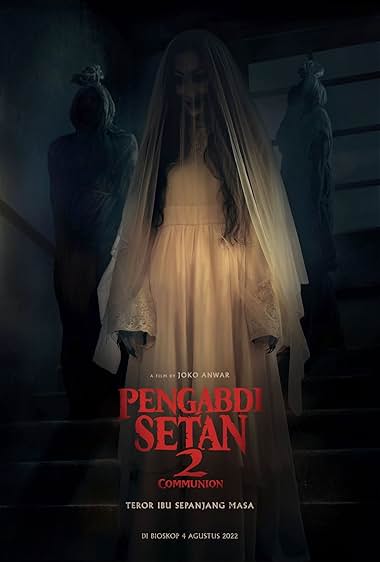
I took a deep breath and fetched the attic ladder. I climbed up, my heart pounding. The attic was dusty and cold, filled with forgotten furniture and rotting boxes. In the center, on a mannequin, stood the wedding dress. It was beautiful, with lace and pearls, but it was incomplete. The hem was unfinished, and a long, black thread dangled from the needle stuck in the fabric. As I watched, the thread began to move, weaving itself in and out of the cloth, as if invisible hands were sewing. I reached out to pull it free, and a cold, clammy hand closed around my wrist. I screamed and yanked back, but the grip tightened.
I stumbled backward, falling off the ladder and hitting the floor hard. The static in the attic grew to a deafening crescendo, and then stopped. Silence. Aunt Rosa helped me up, her face ashen. ‘We have to destroy it,’ she whispered. We grabbed a can of kerosene from the shed and poured it over the dress, then set it ablaze. The fire roared to life, and for a moment, I thought we had won. But as the flames consumed the fabric, the static returned, not from the attic, but from my own ears. I looked at Aunt Rosa, and her mouth was moving, but I couldn’t hear a word. I was drowning in the noise.
When the fire died down, leaving only ashes, the static faded. But the feeling of being watched never left. From that day on, every time I look at a radio, or hear the faint crackle of a dead signal, I feel it. That itch on the back of my neck. That whisper of hair against my cheek. I know it’s not over. The dress is gone, but the thread remains. And sometimes, in the dead of night, when the snow falls outside my window, I see a wisp of black hair curling from the shadows, and I know she’s still waiting, waiting to finish her work.