Audio
 Shorts
 Movies & Games
 Blog & Stories
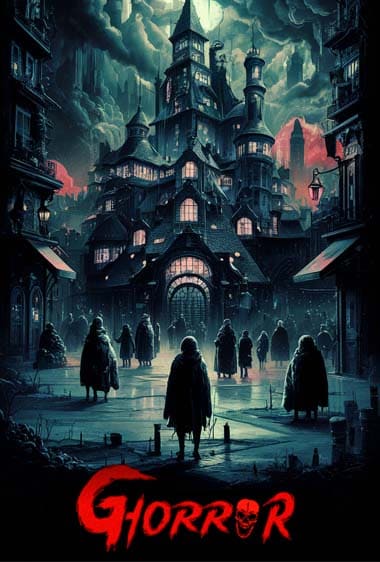
The town of Millbrook sat in the shadow of the Cascade foothills, a place where the forest pressed close and the air always smelled of pine and damp earth. My friends and I—I’m Leah, and there’s Marcus, Priya, and Sam—had grown up hearing stories about the old Harlow State Hospital for the Developmentally Disabled, a sprawling complex that had been abandoned since the late ’90s. It sat on a thousand acres of prime land, its buildings crumbling behind a chain-link fence that sagged in places, inviting us in. We weren’t troublemakers, just curious, drawn to the place like moths to a flickering porch light. Our houses were within a ten-minute bike ride of the campus, and on summer nights, when the heat made sleep impossible, we’d slip through a gap in the fence and wander the grounds.
The hospital had a reputation, of course. Whispers of experiments, of children left forgotten, of a doctor who vanished under mysterious circumstances. But we were teenagers, invincible, and the horror stories only made it more exciting. We’d explored every building—the wards, the admin block, the morgue with its steel tables stained with rust—and we’d never seen anything truly frightening, just decay and graffiti and the occasional raccoon. The only place we hadn’t thoroughly checked was the old campsite called Camp Via, tucked away in the woods behind the main campus, and the ropes course that loomed over a shallow pond.
One Friday, a full moon rising, we decided to camp there overnight. Marcus brought a tent, Priya brought snacks, Sam brought a flashlight with a red filter to preserve our night vision. We set up near the pond, the water black and glassy, and for a while we sat around a small fire, trading stories we’d heard from a kid whose dad used to work maintenance. He said the ropes course wasn’t always for the patients—it was built as a team-building exercise for the staff, but after a child died in an accident, they closed it. The details were murky: a fall, a snapped cable, a cover-up. We laughed it off, but as the fire died, the woods felt darker, the shadows longer.
Later, unable to sleep, I wandered to the edge of the clearing. The ropes course stood like a skeleton of wooden platforms and steel cables, its silhouettes sharp against the moonlit sky. I heard a faint creak, then another, as if something was moving up there. I called the others, and we decided to climb it—just to prove we weren’t scared. We ascended the first platform, then the second, our footsteps echoing on the planks. The course stretched into the trees, leading to a high tower that overlooked the entire property. As we reached the top, the view was stunning: the pond like a mirror, the hospital buildings ghostly in the distance. But then I noticed something odd—a small, rusted locker attached to the tower, its door slightly ajar. Inside was a child’s shoe, a single red sneaker, and a note in faded ink: ‘Don’t look down.’
We shrugged it off, but on the way down, Marcus, who was leading, stopped abruptly. ‘There’s something in the trees,’ he whispered. We peered into the darkness, and for a moment, I saw a figure—a thin, pale shape that seemed to blend with the bark—watching us from between two trunks. It didn’t move, but it felt like it was waiting. We hurried down, our laughter gone, and retreated to the tent. That night, we all lay awake, listening to the forest. I thought I heard a child’s voice, soft and singsong, calling my name. I covered my ears, but it didn’t stop. At dawn, we packed up and left without speaking.
A week later, Priya fell ill—a fever that came and went, accompanied by strange bruises forming on her arms and legs in perfect, circular patterns. The doctors couldn’t explain it. Then Sam started sleepwalking, and one night, we found him standing at the edge of the hospital fence, staring at the main building, murmuring ‘the course, the course.’ I began to see the pale figure everywhere—in my peripheral vision, at the foot of my bed, behind the shower curtain. It never spoke, but its mouth would open and close silently, as if trying to tell me something.
Desperate, I went back alone to the ropes course, determined to find answers. I reached the top platform and opened the locker again. This time, the shoe was gone, but a new note was there: ‘She wants to climb again.’ I looked down at the pond below, and in its reflection, I saw a girl—no more than eight, with long black hair, standing on the platform beside me. She was wearing one red sneaker. I turned, but she was gone. That’s when I noticed the ropes around me were quivering, vibrating with an energy that felt alive. And I heard, clearly, a child’s laugh followed by a whisper: ‘You brought your friends. Let’s play.’
Now, it’s been three months. We never go near the place anymore, but it doesn’t matter. The ghost of that girl—if that’s what she was—followed us home. Priya’s bruises have formed into the shape of a handprint on her back. Sam refuses to speak, just points at the woods. And every night, I hear a soft tap on my window. When I look, she’s there, her hand on the glass, mouthing words I can’t understand. I tried to tell the police, but they think we’re just kids with overactive imaginations. But I know the truth: we found something that day, something that was buried with that child, and it won’t rest until all of us are on that course with her. So if you ever drive past Millbrook, and you see the old hospital, don’t go near the ropes. Don’t even look at it. Because she sees you. And she’s been waiting.