Audio
 Shorts
 Movies & Games
 Blog & Stories
In the summer of 2004, I was twelve, and my father had inherited his childhood home in the highlands of Scotland—a rambling granite house called Cnoc na Coille, or “Hill of the Wood.” The place had been in our family for generations, though my father had rarely spoken of it. My parents had divorced, and this was our first summer there, just the two of us, to escape the city. I was already a believer in things unseen, much to my father’s chagrin. He was a practical man, a geologist, and he chalked up my “fancies” to an overactive imagination fed by too many horror comics. But I knew what I had seen in our apartment back in Glasgow: the cold spots, the flickering lights, the faint sobbing from the empty hallway. My father never saw any of it, but I did.
The house was dark and damp, with thick stone walls that seemed to drink the daylight. My father spent most of his time outdoors, mapping the local rock formations, leaving me alone. The interior was a maze of narrow corridors, low ceilings, and rooms that smelled of mothballs and rotting timber. The furniture was heavy, dark oak, carved with strange faces that seemed to watch me. I would wander the rooms, running my fingers along the dusty shelves, feeling the weight of history. In the study, I found a locked drawer. My father was surprised when I asked about it, and he shrugged, saying it had been locked as long as he could remember, and the key was lost.
That summer, the days were long, but the nights were longer. I would lie in my bed, listening to the wind moan through the eaves, and I would feel a presence—something patient and cold, lurking just beyond my door. I tried to tell my father, but he would just pat my head and say, “It’s the old house settling, lad. Nothing to fear.” But I knew better. The air would grow thick, and I could hear a faint, rhythmic scraping, like fingernails on wood, coming from the walls. I began to keep a flashlight and a small knife under my pillow.
One afternoon, while my father was away on a long hike, I decided to explore the attic. The stairs were steep and creaked with every step, and the air was choked with dust. At the top, there was a single bare bulb that cast a weak halo. The attic was filled with trunks, broken chairs, and piles of yellowed newspapers. In the corner, half-hidden under a tarp, I found a wooden chest with iron bands. It was heavy, and the lock had been forced open. Inside, wrapped in oilcloth, was a journal. The pages were brittle, but the handwriting was elegant and faded. It belonged to a woman named Elspeth, who had lived there in the 1920s. She wrote of her loneliness, of her husband who was often away, and of a visitor who came to her at night, a “man of iron and shadow.” She described how he would whisper to her, and how she would do things she couldn’t remember. The last entry was dated 1930, and it simply said, “I have become his. Do not look for me.” I felt a chill run down my spine, and I knew I had found the truth.
That night, I couldn’t sleep. Every creak of the old house seemed louder, every draft colder. I lay rigid under my covers, listening. Then I heard it: the scraping, right outside my door. It was slow, deliberate, like something dragging itself along the floor. I gripped my flashlight and called out, “Who’s there?” The scraping stopped, and for a moment, the house was silent. Then the door creaked open, slowly, as if pushed by an unseen hand. I clicked on the flashlight, but the beam revealed nothing—just the empty hallway. But the air was cold, impossibly cold, and I could smell iron, like blood and rust. I whispered, “Elspeth?” And I heard a voice, dry as leaves, say, “You found me, boy.”
I bolted upright in bed, drenched in sweat. The door was closed, and the sun was streaming through the curtains. It had been a nightmare, but it felt so real. I told my father about it over breakfast, and he looked at me with a weary sigh. “There are no such things as ghosts,” he said. “But you’re not the first to talk about strange things in this house. My grandmother used to say she felt a presence in the study, but it was just her mind playing tricks.” He went back to his toast, but I saw a flicker of doubt in his eyes.
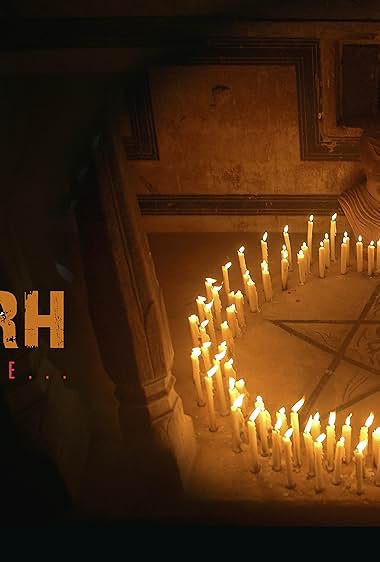
Over the next few days, I couldn’t get Elspeth’s journal out of my mind. I read it thoroughly, and I noticed something: she described a carved sigil on the underside of the study desk. I hadn’t noticed it before, but when I checked, there it was—a strange, swirling mark, burned into the wood. I traced it with my finger, and I felt a surge of energy, a cold jolt that ran up my arm. That night, I decided to do something. I took a piece of chalk and drew the sigil on my bedroom floor, and I lit a candle, and I sat in the middle of it. I called out, “Elspeth, I know you’re here. Show yourself.” For a long time, nothing happened. Then the candle flame flickered, and the temperature plummeted. A figure began to form in the corner of my eye—a tall man, gaunt, with skin like cracked iron. He had no eyes, just empty sockets, and his mouth was a thin slit. He spoke, and his voice was like grinding metal. “You should not have called me,” he said. “But now you are mine.”
I screamed and scrambled backwards, but I was frozen in place. The figure advanced, and I felt a cold hand close around my ankle. Just then, my father’s voice rang out from downstairs, calling my name. The figure’s grip loosened, and it faded, but I could still feel its presence, watching me. I ran downstairs, shaking, and I tried to explain, but my father just shook his head. “Enough, son. You’re scaring yourself.”
But I knew it was real. That night, I took the journal and the sigil, and I burned them in the fireplace. The paper crackled and turned to ash, and for a moment, I felt a sense of relief. The scraping stopped. The house felt peaceful again. My father and I finished the summer in quiet, and we never spoke of it again. But sometimes, when I’m alone, I still feel a cold hand on my shoulder, and I hear a voice that whispers, “You may have burned my words, but I am not so easily erased. I am still here, waiting.” And I know, deep down, that the iron man will always be a guest in that house, waiting for the next believer to wander too close.