Audio
Audio Shorts
 Movies & Games
 Blog & Stories
I’ve always believed that some places carry a weight you can’t see, a kind of pressure that makes the air thick and your skin crawl. The old Bellamy farm was one such place, a sprawling property on the edge of the county that had been in the same family for generations—until old Mrs. Bellamy passed, and her grandson, a stoic man named Tobias, inherited it. He didn’t live there, though. He was a city architect, busy with skyscrapers and blueprints. So when he asked my friend, Marcus, and me to look after the place for the autumn, we jumped at the chance. It was a chance to earn some cash, get out of the cramped apartment, and maybe explore a house that had stood since before the town was even a thought. The stories about the place were just stories, or so I told myself. Marcus, ever the skeptic, laughed them off. But the moment we drove up the gravel path, through the rows of dying maples, something felt off. The house itself was a Victorian, a hulking silhouette against the October sky, with a porch that wrapped around like a hungry mouth. The windows were dark, and the wind seemed to moan through the bare branches. We had a key, and we let ourselves in. The air inside was stale, cold, and carried a faint scent of dust and old wood. Our job was simple: rake leaves, clear the gutters, and keep an eye on the place until Tobias returned in late November. We settled into the ground-floor bedroom, the one that faced the backyard, and unpacked our sleeping bags. The first few days were uneventful, except for the constant feeling that we weren’t alone. It was subtle at first—a prickle on the back of my neck, a flicker of movement in the corner of my eye. But every time I turned, there was nothing. Marcus joked that the house was playing tricks on us. But I knew better. The leaves were piling up, and we spent hours raking them into enormous piles, our breath fogging in the crisp air. One afternoon, we decided to take a break and go inside for lunch. We were in the kitchen, making sandwiches, when I noticed the doorway to the adjacent living room. It seemed… wrong. The air in the frame shimmered, like heat rising from asphalt, but it was cold. And within that distortion, there was a shape. A man. Tall, dark, with a hat pulled low over his face. My heart slammed against my ribs. I nudged Marcus, who was mid-bite. He saw it too. His fork clattered to the floor. We didn’t say a word. We just grabbed our food and bolted outside, our hearts pounding. We sat on the back steps, the leaves rustling around us, trying to catch our breath. We rationalized it, of course. A trick of the light. An old house settling. But I couldn’t shake the feeling of being watched. As we ate, we heard the screen door creak open behind us. We froze. It slammed shut with a bang. We turned, expecting to see someone, but there was no one. Then we heard it—the sound of footsteps on the wooden deck. Heavy. Deliberate. They approached us, one step at a time. But there was no one there. The air in front of us began to distort again, a wispy, human-shaped thing, wavering like a heat mirage. It was moving toward us, and we could feel a cold dread emanating from it. We scrambled to our feet, abandoning our sandwiches, and sprinted to the car. We didn’t look back. We drove to town, to the diner, where we sat in a booth, shivering. Marcus tried to laugh it off, but his hands were shaking. We decided to stay in a motel that night, but we couldn’t just leave the house unattended. So the next day, we returned, but this time we were armed with flashlights and a sense of dread. We stayed during the day, but we never went inside alone. We worked in the yard, always keeping an eye on the windows, but the house seemed quiet. For a few days, nothing happened. We began to relax, almost convincing ourselves that we had imagined it. But then, things started to happen. Small things at first. A door that was locked suddenly found open. A rake that we left in the yard was now leaning against the porch railing, as if someone had used it. We would hear whispers when the wind blew, soft and unintelligible, coming from the direction of the woods. One evening, as we were finishing our work, I saw the outline of a man again, standing in the upstairs window. Just watching. We decided to leave the last of the raking for the next day, and we packed up to go back to the motel. But as we were walking to the car, we heard a sound coming from the barn. A rhythmic, scraping sound, like something being dragged across the floor. Curiosity got the better of us, and we crept toward the barn. The door was ajar, swaying slightly. We peered inside. The interior was dark, but we could make out a figure—a tall, thin man, standing in the center, holding a rake. He was facing away from us. He didn’t turn. He just started to rake the dirt floor of the barn, even though there were no leaves. The sound was horrid, a harsh, gritty noise that set our teeth on edge. We backed away slowly, not wanting to draw attention. But as we did, the raking stopped. The man slowly turned his head, not his body, and we saw his face. It was gaunt, with sunken eyes that seemed to bore into our souls. He smiled, a wide, unsettling grin, and then he vanished. We ran to the car, and we didn’t stop driving until we were back in the city. We never returned to the farm. We told Tobias that we couldn’t finish the job, citing a family emergency. He understood, or at least he pretended to. But I couldn’t let it go. I had to know what we had seen. So I went to the local library, to the town’s historical society, and I dug through old records. What I found chilled me to the bone. The farm had a history, a dark one. In the 1800s, a farmer named Josiah Bellamy had lived there with his wife and son. Josiah was known for his obsession with his crops, often working from dawn to dusk. One autumn, a blight hit his fields, and he lost everything. In a fit of madness, he took the rake, the one he had used for years, and he… he killed his family. Then he hung himself in the barn. The police found him swinging from the rafters, the rake still in his hands. The stories said that his spirit still wandered the farm, searching for something lost. But what? I think I know now. In the distance, I could almost hear the sound of scraping, as if he was still raking, still trying to gather what he could never have. The land will always remember, and so will I. No matter where I go, I’ll never forget the outline of that man, and the rake’s harvest that never ends.
The Rake’s Harvest
Comment
7 min read
Story Premise
7 min read (1,234 words)
"I’ve always believed that some places carry a weight you can’t see, a kind of pressure that makes the air thick and your skin crawl. The old Bellamy farm was one such place, a sprawling property on the edge of the county that had been in the same family for generations—until old Mrs. Bellamy passed, […]"
Related Horror Movies to Watch
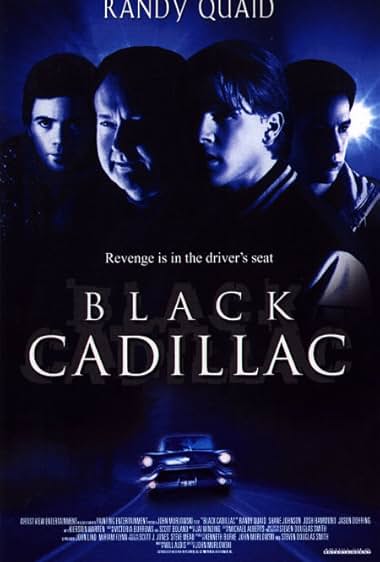
Black Cadillac
2003