Audio
 Shorts
 Movies & Games
 Blog & Stories
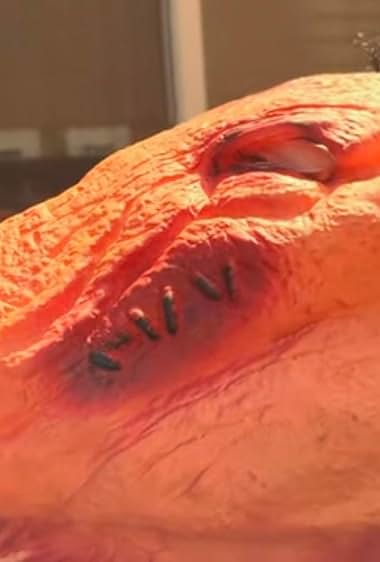
The autumn I turned nine, my family moved to the edge of a dying town named Goldengrove, where the main street was lined with shuttered shops and the only sound after dusk was the wind rattling the cornstalks in the surrounding fields. My grandmother, a woman of few words and many secrets, owned a farm just beyond the town limits, and it was there that my mother, my aunts, and a swarm of cousins gathered for the annual pumpkin carving. That year, the pumpkins were not purchased from a roadside stand but grown in a patch that had been fallow for decades until my grandmother insisted on tilling it. She claimed it was good soil, though the ground gave up black stones and bits of rusted iron as we hoed. The night of the carving, we laid the pumpkins out on the long wooden table in the barn, their orange hides beaded with cold sweat. There were eleven of us, ages six to twelve, and while we dug out the pulp, my grandmother sat in the corner, her rocking chair creaking in time with the wind. She told us about the old man, Elias Crane, who had built the barn a century ago. He had been a man of great wealth and greater cruelty, known for lending money to desperate farmers and repossessing their land when they failed. He had a habit of walking the fields at night, carrying a lantern, checking his property. One harvest, he vanished, and his body was never found. The townspeople whispered that the families he had ruined had finally taken their revenge, burying him in an unmarked grave in one of his own fields. My grandmother said that on Halloween, his lantern could be seen bobbing among the corn, and that if you heard the crunch of footsteps behind you and smelled pipe smoke, you had better not look back. We laughed nervously, and she smiled, a thin lipped expression that did not reach her eyes. When the pumpkins were hollowed, she produced a single, perfect lantern, not made of gourd or metal, but of a small, wizened pumpkin that seemed to have been carved by something other than a knife, its face twisted in an agony that made my stomach clench. She lit a candle inside, and the light it cast was not warm but pale yellow, like the glow of a dying sun. ‘This is Eli’s lantern,’ she said. ‘He lost it the night he disappeared. If you carry it, you can summon him.’ We didn’t want to, but she insisted, saying that each of us must take a turn carrying it through the cornfield path that led to the old scarecrow at the edge of the property. The path was a dark tunnel between rows of tall, dry stalks that clattered like bones. My cousins went first, each one coming back pale, some shaking, claiming they heard whispers, but none would say what the lantern showed them. As the oldest, I was last. The lantern was heavy, as if filled with something more than wax. I walked into the corn, the light flickering, casting leaping shapes that seemed to move just outside my vision. The crunch of my footsteps was the only sound, but then I felt a presence behind me, and the air grew cold. I smelled pipe smoke, rich and sweet. I remembered my grandmother’s warning, but I was young and foolish, and I turned my head. There was nothing there, only the corn. But when I faced forward again, I saw a figure standing in the path ahead, a tall man in a long coat, his face obscured by shadow, but I could see the gleam of a lantern in his hand, though his was dark. He raised his arm and pointed at me, and I felt a pull, as if he wanted the lantern I carried. I ran, the lantern swinging, and burst into the clearing by the scarecrow, gasping. My cousins were all there, waiting, and they looked at me with a fear I did not understand. ‘You looked, didn’t you?’ my cousin Mia whispered. I nodded. ‘He’s coming now,’ she said. We all listened, and from among the corn came the sound of slow, deliberate footsteps, and the glow of a lantern, bobbing. We fled back to the barn, but my grandmother was waiting, her face stern. She took the lantern from me, and her eyes were like flint. ‘You have seen him,’ she said. ‘Now he will not rest until he has what he wants.’ She whispered something to my mother, who turned white. The next day, my grandmother took the lantern and buried it in the field, under a gnarled oak. But that night, I woke to see its glow outside my window, bobbing in the field. And I have seen it every Halloween since, sometimes closer, sometimes far, but always there, waiting. The town has died, and my family has scattered, but the lantern remains, and I know that one night, he will find the one who looked, and take what is his.
The Harvest Lantern
Comment
5 min read
Story Premise
5 min read (857 words)
"The autumn I turned nine, my family moved to the edge of a dying town named Goldengrove, where the main street was lined with shuttered shops and the only sound after dusk was the wind rattling the cornstalks in the surrounding fields. My grandmother, a woman of few words and many secrets, owned a farm […]"