Audio
 Shorts
 Movies & Games
 Blog & Stories
I had been living in the converted attic of an old Victorian house for about a year and a half. The space was quirky—sloped ceilings, a single dormer window, and a bed that fit snugly against the wall, leaving barely enough room to walk around. I’d always felt a bit uneasy there, but I chalked it up to the creaks and groans of an old structure. That night, however, something changed.
I woke from a deep, dreamless sleep to a suffocating weight on my chest. My eyes snapped open, but the room was pitch black, save for a faint sliver of moonlight filtering through the dormer. I tried to move, but my limbs felt like lead. Then I realized the weight wasn’t just my blanket; it was a presence—cold, oppressive, and pressed against me.
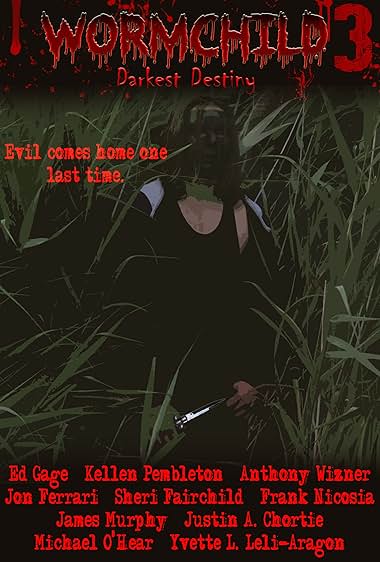
I turned my head slightly, and my blood ran cold. There, crammed between the wall and me, was a boy. He was perhaps twelve or thirteen, with jet-black hair that seemed to absorb what little light there was. His face was inches from mine, his eyes wide and completely black, and his mouth was an open void, as if it had swallowed all the shadows. He didn’t blink. He just stared, unblinking, his breath a faint, icy whisper against my cheek.
My heart hammered, but I couldn’t move. The boy’s lips didn’t move, but I heard a voice—not from him, but from everywhere—a low, rhythmic hum, like a far-off lullaby. It was wrong, dissonant, as if it were being played backwards. I tried to scream, but my throat was sealed. The hum grew louder, and the space between us seemed to shrink, the walls closing in.
I felt a pressure on my arm, like a hand gripping me, but his hands were at his sides. The touch was cold, numbing, and it spread up my arm like frost. I thrashed mentally, willing my body to respond, but it was no use. The boy’s head tilted, a sickening crack accompanying the motion, and his mouth widened, revealing nothing but an endless dark.
The hum became a chorus of whispers, all in a language I didn’t recognize, yet somehow understood: “You don’t belong here.” The words echoed in my skull, and I felt the pressure increase until I was flattened against the wall, the boy’s face now overlapping mine, his black eyes boring into my soul.
Then, as suddenly as it started, the hum stopped. The boy blinked—once, twice—and then his mouth closed, forming a thin, grotesque smile. He whispered, “It’s your turn to leave,” and in that instant, I was flung backward, out of the bed, onto the cold hardwoods.
I gasped for air, drenched in sweat. I flicked on the bedside lamp. The boy was gone. The room was empty. I stood, shaking, and saw the imprint on the mattress—a faint, indented shape of a small body, as if something had been there for a long time. A chill ran down my spine as I realized the indentation was in the shape of the bed, but it faced the wall, as if he had been lying there for years, waiting.
I didn’t sleep that night. I sat in the corner, watching that indent, daring it to move. At dawn, I saw something that made me grab my suitcase: the indent had shifted. It was slightly closer to the center of the bed, as if the boy had stirred and was slowly making room.
I moved out that week, and I haven’t slept in a bed against a wall since. But sometimes, in the dead of night, I still feel that pressure—that cold, suffocating presence, and I hear that hum, faintly, as if from a great distance. And I know that somewhere, in the cramped space between a wall and a bed, the boy is still waiting for his next guest.