Audio
 Shorts
 Movies & Games
 Blog & Stories
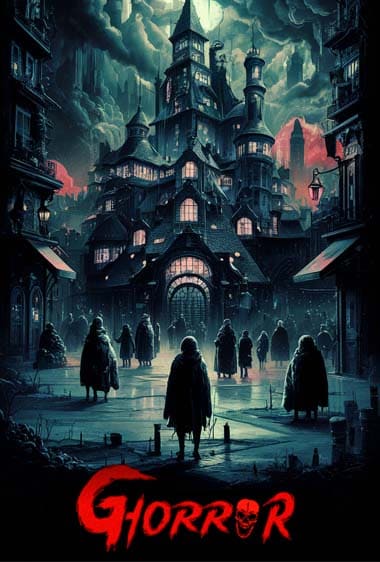
Mira had always been drawn to old houses, their creaking bones and layered histories. So when her friend Lila signed a lease for the dilapidated Victorian on Thornhill Avenue, Mira felt a twinge of envy, despite the peeling wallpaper and the scent of damp rot that clung to the air. Lila, a pragmatic nurse with a love for antique furniture, scoffed at the idea of ghosts. But within a month, her demeanor changed. She called Mira, her voice trembling, describing a poltergeist’s chaos in her upstairs living quarters: a cast iron skillet soaring from the kitchenette into the hallway, a china plate shattering against the floorboards, doors slamming shut with violent force, and the relentless patter of footsteps that paced the length of the room above her bedroom, even when she knew she was alone above. Intrigued, Mira, a folklore student with a scientific bent, decided to investigate.
Mira arrived on a grey autumn afternoon. The house stood at the end of a cul-de-sac, its gables like skeletal fingers. As she stepped onto the porch, the door swung open, revealing Lila, her face pale, dark circles under her eyes. ‘Thank god you’re here,’ she whispered. ‘It’s been worst today.’ Lila led Mira inside. The downstairs was cluttered with boxes, a roommates’s half-unpacked life. Lila’s roommate, a taciturn artist named Greta, sat in the living room, painting, ignoring them. Lila explained that all the phenomena occurred upstairs. They climbed a narrow, steep staircase hidden behind a door that resembled a closet. The steps were worn and slanted, the walls closing in. At the top, a single, vast room opened up, with wooden floors polished by time, and two strange doorless openings side by side, leading to small, empty alcoves. The room was cold, a chill that seeped into Mira’s bones.
Mira set up a voice recorder and a thermal camera on a tripod, while Lila recounted the events. Suddenly, a loud bang echoed from the corner. They both froze. The kitchenette’s drawers shot open, cutlery spewing onto the floor. A coffee mug lifted from the counter, hovered, and then shattered against the far wall, missing Mira by inches. Mira felt a surge of adrenaline. She spoke aloud, ‘Is someone here? Do you want to communicate?’ A cold spot formed near her, and she saw her breath mist. The room’s single window, sealed shut with paint, suddenly burst open, the glass shattering outward, and a gust of wind blew leaves into the room, swirling wildly. The leaves coalesced into a dense, spinning column that moved towards the hallway, then dissipated.
Mira noticed something odd: embedded in the wood floor, near the alcoves, was a charred mark, like a scorch from a fire. Curious, she knelt down, running her fingers over the blackened grain. Lila told her that a previous tenant had mentioned a fire in the house decades ago, and that the upstairs had been used as a drying room for tobacco, and later as a quarantined ward during a flu outbreak. Mira pulled out her phone and searched for old news articles about the house. She found a brief mention: in 1932, a woman named Elsie Hargrove had lived here, caring for her invalid father. The article described a suspicious fire that claimed both their lives. The fire’s origin was attributed to a faulty oil lamp, but there was a hint of arson.
The temperature plummeted further. A heavy pressure filled the room, and Mira felt a presence watching. The recorder picked up a low, guttural murmur, almost like speech. She played it back. It sounded like ‘get out’ or ‘my house.’ The room’s two doorless alcoves began to emit a faint glow, like dying embers. Suddenly, a stack of books on a shelf launched across the room, one hitting Greta’s canvas downstairs with a thud. Lila screamed, ‘It’s never done that before!’ Mira realized that the spirit was not just a poltergeist; it was a trapped, vengeful soul trying to protect something. She felt a growing dread as she deduced that the scorch marks were not from the fire, but from a ritual—a failed attempt to cross over.
Mira cleared her throat and addressed the spirit directly: ‘Elsie, if you’re here, we are not your enemies. We don’t want to hurt you. We want to understand.’ The room fell silent. Then, one of the alcoves began to warm, and a faint, sad sobbing could be heard. A child’s lullaby hummed from nowhere, a melody that sounded Victorian. Mira felt a urge to step into the alcove. As she did, the floor gave way slightly, and she saw a small, hidden compartment beneath a loose floorboard. Inside, wrapped in moth-eaten cloth, was a diary. Mira opened it to the final page. The handwriting was shaky: ‘Father is gone. They say I started the fire. But it was the man in the dark, the one who promised to free me. He lied. Now I am bound to these walls, watching them come and go, waiting for one who can see.’
Mira looked up, tears streaming down her face. She understood now: Elsie had been murdered by a sinister visitor, and her soul was trapped in the aftermath of a ritual gone wrong. The poltergeist activity was an attempt to drive away intruders, but also a cry for help. Mira whispered, ‘We’ll help you, Elsie. We’ll set you free.’ She began to perform a cleansing ritual she had studied, using lavender and salt, creating a circle around the alcoves. The room grew chaotic—objects flew, the walls shook, and a roaring wind howled. Lila and Mira held hands, repeating affirmations. Then, a blinding light filled the room, and a figure appeared—a woman in period dress, her face twisted in pain. The figure raised her arms, and the light grew, swallowing the room. Then, silence. The light faded. The room was still. The diary closed by itself.
Mira and Lila stood in the aftermath, breathing heavy. The house felt different—lighter, warmer. Greta called from downstairs, ‘What the hell is going on up there?’ Mira looked at the scorch marks; they were gone, as if erased. As they descended the stairs, Mira knew that Elsie had been released. But as they reached the bottom, the front door slammed shut by itself. Mira looked back up the stairs, and for a fleeting moment, she saw a pair of glowing eyes in the darkness of the upstairs hallway. The eyes belonged to something else—something that had been hiding behind Elsie, feeding on the chaos. A shiver ran down her spine. She grabbed Lila’s arm and said, ‘We need to leave. Now.’ They rushed out, and as they crossed the threshold, the house seemed to breathe a sigh of relief. But Mira knew that what they had truly unleashed was not a benevolent soul, but a nightmare that had been waiting for a chance to escape, and it was now free.
The next day, Mira received a voicemail from Lila, her voice frantic: ‘Mira, the house is quiet. But I found something in the garden—a black stone with a symbol. And I have this horrible feeling that I’m not alone. It’s like it followed me home.’ Mira stared at her phone, the cinder in her chest burning cold. She realized that the house was not the only haunted place—the specter had latched onto Lila. And she knew, with dread certainty, that the Cinder Room was just the beginning.