Audio
Audio Shorts
 Movies & Games
 Blog & Stories


In the shadowy corridors of pre-revolutionary Russia, a disgraced monk with a twisted gift for hypnotism and healing claws his way from rural obscurity to the glittering, corrupt heart of St. Petersburg. Rasputin’s licentious escapades and unholy charisma ensnare the aristocracy, turning their decadent world into a nightmare of paranoia and obsession. As his influence over the royal court grows, so does the terror he sows—whispered conspiracies, maddening visions, and a sinister allure that threatens to consume all who cross his path. Will anyone stop this mad monk before the empire itself crumbles into darkness?
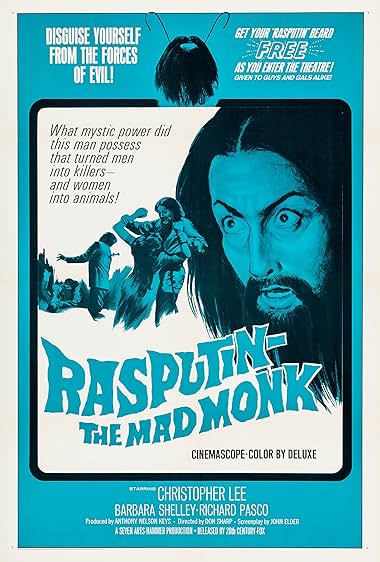
Rasputin: The Mad Monk
Directors
Writers
Stars
Language
Country
Production
Frequently Asked Questions
What is Rasputin: The Mad Monk about?
In the shadowy corridors of pre-revolutionary Russia, a disgraced monk with a twisted gift for hypnotism and healing claws his way from rural obscurity to the glittering, corrupt heart of St. Petersburg. Rasputin's licentious escapades and unholy charisma ensnare the aristocracy, turning their decadent world...
When was Rasputin: The Mad Monk released?
Rasputin: The Mad Monk was released in 1960.
Where can I stream Rasputin: The Mad Monk?
Check local streaming services and digital release platforms for Rasputin: The Mad Monk availability.
User Reviews
HorrorHound66 – 7/10
“Rasputin is a slow-burn creepfest with a magnetic performance from Christopher Lee. The atmosphere is thick and gloomy, and the hypnotism scenes really got under my skin. Not perfect, but a solid watch for classic horror fans.”
GothicGreta – 6/10
“I loved the historical setting and Lee's intense portrayal, but it felt more like a melodrama than a horror movie. The scares are subtle, and it takes a while to get going. Still, the final act is genuinely unsettling.”
ScreamQueen19 – 5/10
“It had its moments, but I was hoping for more supernatural terror. Lee is great, but the story drags in the middle and the ending felt rushed. Decent for a rainy afternoon, but not a must-see.”
VHS_Vampire – 8/10
“This is a hidden gem! The eerie music, the shadowy cinematography, and Lee's hypnotic gaze make it a chilling experience. It's more psychological than gory, which I appreciate. Definitely underrated.”