Audio
Audio Shorts
 Movies & Games
 Blog & Stories
Before my family moved to the arid plains of western Texas, we spent a summer in my great-aunt’s crumbling farmhouse in the Louisiana bayou. I was thirteen, restless, and convinced that the sweltering humidity was slowly melting my brain. My only relief was the company of my cousin, Oliver, who was a year older and just as bored.
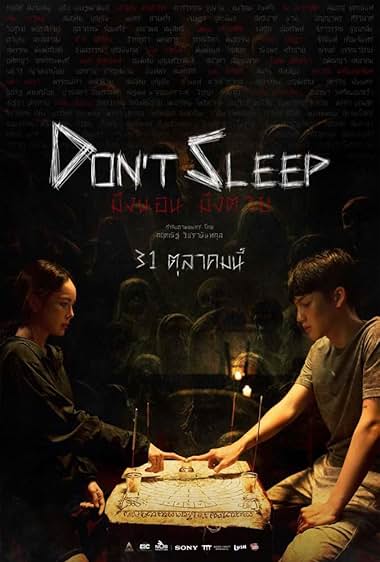
One sweltering afternoon, while exploring the attic, we stumbled upon a dusty box containing a vintage spirit board, its wood warped and stained with something dark. Oliver’s eyes lit up with mischief, but I felt a knot of dread in my stomach. We had heard the warnings, of course, about how such boards could open doors that should remain shut. But we were kids, and the thrill of the forbidden was too tempting.
My great-aunt, a stern woman with a deep distrust of ‘hocus pocus’, was taking her daily siesta in her rocking chair on the porch. We waited until we heard her rhythmic snoring, then crept into the unused parlor, the room where the board had been found. We sat on the dusty floor, our knees touching, and placed our fingers on the planchette. Following the instructions we found in a moldy book, we moved it in three slow circles to ‘wake the spirits’.
At first, nothing happened. The air was thick with dust and the smell of old wood. Oliver smirked, ‘This is stupid.’ I was about to agree when the planchette twitched, as if pulled by an unseen hand. It slid to ‘YES’. We exchanged nervous glances. My heart hammered in my chest. ‘Who are you?’ Oliver asked, his voice a whisper.
The planchette began to glide, spelling out a name: ‘M A R I E’. I felt a cold draft despite the heat. ‘Marie,’ I repeated, ‘What do you want?’ The planchette moved again, faster this time: ‘W A T E R’. Oliver and I looked at each other, perplexed. ‘Water?’ he said. The planchette suddenly shot to ‘GOODBYE’, and the window behind us slammed shut, making us jump.
We tried to dismiss it as coincidence, but the air felt charged, and the shadows seemed deeper. That night, as I lay in bed, I heard a faint dripping sound. I ignored it, but it grew louder, a persistent plink-plink-plink from the corner of my room. When I finally turned on the lamp, the corner was dry, but the sound continued, now coming from the walls, the ceiling, everywhere. I pulled the covers over my head and recited every prayer I knew until I fell asleep.
The next day, Oliver seemed uneasy. He told me he had a dream about a girl with black, streaming hair, her skin bloated and gray, standing at the edge of a vast, dark lake. She was calling out, ‘Marie… Marie…’ But her voice was like the gurgle of drowning. I grew cold even in the morning heat.
We decided we needed to end the connection. We went back to the parlor, but the board was gone. In its place was a puddle of murky water on the floor. We backed away, and I swear I saw a faint, dripping figure in the hallway, just out of the corner of my eye.
That evening, my great-aunt noticed our pale faces. She sat us down, her eyes narrowing. ‘You touched the board, didn’t you?’ We nodded, ashamed. She sighed, a sound like wind through dead leaves. ‘That board was used to contact my sister, Marie. She drowned in the bayou when we were young. She never found peace… and she’s been looking for a way back ever since.’
A chill ran down my spine. ‘She wants water,’ I whispered. My great-aunt nodded slowly. ‘She’s trying to pull you to her. To the place she died.’
Over the next few days, the dripping never stopped. It followed us around the house, and occasionally we’d see wet footprints appearing on the dusty floor, leading towards the back door that opened to the bayou. The bayou itself, once a murky green, seemed dark and hungry. Oliver became obsessed, staring out the window for hours, muttering about a ‘whispering lake’.
Then, one night, I woke to find my bed soaked. Not with sweat, but with cold, smelly water. I screamed, and Oliver burst in. He was pale, his eyes wide. He said he heard me calling his name from the direction of the bayou, but I was in bed. The door behind him creaked open, and we both saw it: a shadowy, waterlogged figure standing in the hallway, dripping onto the floor, its head tilted as if listening.
We ran to my great-aunt’s room, but she was gone. The front door was open, and beyond, the sound of water rushing, like a flood. We stumbled out into the night, and the ground was slick with mud and water. A harsh wind blew, and in the distance, the bayou was no longer a bayou but a roaring river, swallowing the land. The shadowy figure appeared between us and the safety of the house.
It spoke, not with words, but with the gurgling sound of water filling lungs. ‘You called me,’ it seemed to say. ‘Now you must come.’
Oliver grabbed my hand, and we ran into the water, into the dark, cold flood. We swam with all our strength, but the current was too strong. I felt something wrap around my ankle, pulling me down. I looked back, and saw the faces of Marie and my great-aunt, side by side, their eyes black and empty, reaching for Oliver too.
I gasped for air, but water filled my lungs. The last thing I saw was Oliver’s hand slipping from mine, and then everything went black.
I woke up on the bank of the bayou, coughing up water. Oliver was beside me, unconscious, but alive. The house was gone, replaced by a vast, sunken orchard, its bare branches reaching out of the murky water like drowning arms. For a moment, I thought I heard music, a lullaby, drifting from beneath the surface. Then it faded, and the water was still.
We never spoke of what happened, and we moved away soon after. But sometimes, on hot, humid nights, I hear that dripping sound. I feel a wet hand on my shoulder. And I know that Marie is still waiting, and that the sunken orchard will call me back one day, when I least expect it.