Audio
Audio Shorts
 Movies & Games
 Blog & Stories
The night was a shroud of grey, the fog rolling in from the Yamuna like a breath held too long. In the gated community of Sapphire Heights, the streetlights cast hazy halos, and the apartment towers loomed like silent sentinels. The air was thick with the smell of wet earth and the distant hum of the city. I was with my friend, Rohan, taking our usual evening stroll away from the prying eyes of our families, to the narrow service lane behind the community center, where we could smoke in peace.
The lane was lined with back walls of the buildings, interspersed with large drains that gulped the rainwater, and a small, neglected park at the far end, its swings rusted and its benches cracked. We walked, our footsteps echoing on the damp asphalt, the only sound besides the muffled traffic. Rohan was telling me about his day, but my mind was elsewhere, listening to the quiet.
Then we heard it: a low, guttural barking, not aggressive, but desperate, almost a howl. It came from the direction of the park. We exchanged a glance and quickened our pace, curiosity overriding caution. As we approached, we saw a shape in the middle of the lane, about thirty feet ahead. It was a figure, hunched and still, like a bundle of dark clothes discarded. Beside it stood a medium-sized dog, its fur matted, its head pointed at the figure, barking in short bursts, then whining, as if pleading.
We slowed down. The dog wasn’t looking at us, too fixated on the form. The figure was motionless, too still for a human just sitting. In the fog, it seemed to absorb the light, a darker patch against the grey. A coldness crept up my spine, not just from the winter air. Something in my gut screamed to stop.
Rohan paused, squinting. ‘What is that? A drunk?’ he whispered. I didn’t answer. My heart was beginning to race. The dog’s barking grew more frantic, but then it stopped, and the silence that followed was heavier than the fog. The figure remained unchanged, but I felt as if it were watching us, even though no face was visible.
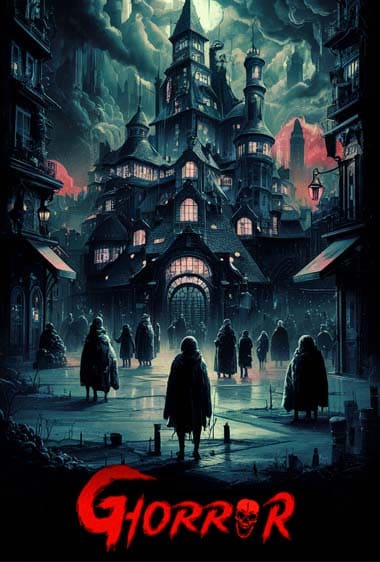
We were maybe fifteen feet away when I could make out details: the figure wore a long, dark coat, frayed at the edges, and its head was bowed. Its hands, pale and thin, rested on its knees. The dog, now quiet, had turned to look at us, its eyes reflecting the dim light with a strange intelligence. Then it let out a low growl, not at us, but at the figure.
That was when the dread hit me, like a physical weight. It wasn’t the fear of a dangerous person; it was the fear of something wrong, something that didn’t belong. I felt a primal urge to run. I looked at Rohan, and his face had gone pale. He was already backing away, his mouth open as if to speak but no sound coming out.
The figure, in that instant, shifted slightly. Its head lifted, and for a heartbeat, I saw a glimpse of a face, but it was too pale, too smooth, like a mask with no features. Then it lowered again. The dog began to whimper, backing away, its tail between its legs.
Rohan grabbed my arm. ‘Let’s go,’ he forced out, his voice tight. I didn’t hesitate. We turned and walked quickly, not running, but our steps were fast, our breath misting in the cold. The dog started barking again behind us, but it sounded farther, perhaps retreating.
We didn’t stop until we reached the main road, where the lights and the sparse traffic seemed to dissipate some of the fear. We laughed nervously, trying to rationalize: it was a homeless person, the dog was being a nuisance, the fog played tricks. But we both knew we had felt something else.
We never spoke of it again, and we found a new spot for our cigarettes. But sometimes, on foggy nights, I see that figure in my mind’s eye, sitting by the drain, waiting. And I wonder if the dog was warning the figure about us, or us about the figure. I never found out what happened to the dog. I haven’t seen it since. But I know one thing: that stillness was not human. And it left behind a scent, like old metal and damp earth, that clings to my memory even now.