Audio
Audio Shorts
 Movies & Games
 Blog & Stories
In the summer of my twelfth year, we moved into the old Bramwell house on Cranberry Lane. It was a tall, narrow Victorian with peeling paint and a porch that groaned like a waking giant. My father, a quiet man with a hidden temper, chose the attic room as his study. I never liked that room. The air there felt thick, as if it were holding its breath. I later learned he used it for his ‘experiments’—a Ouija board, candles, and books bound in cracked leather. I didn’t know then what he was summoning.
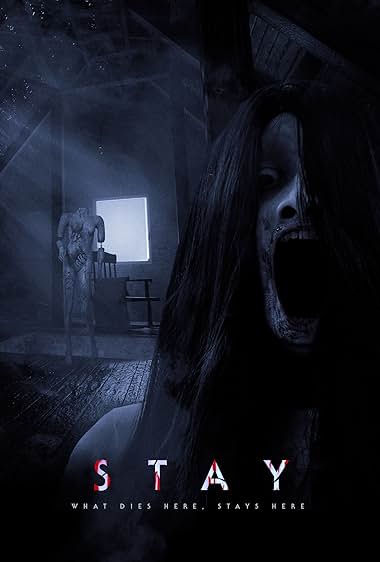
My mother, a gentle woman worn thin by years of my father’s moods, dismissed my tales of a girl in my room. She said it was just my imagination, a lonely child’s fancy. But I knew better. The girl was real. She had long, dark hair that moved as if underwater, and she never spoke, only pointed. She pointed at my father’s study, at the floorboards beneath my bed, and at the window when the moon was full. I called her Mira, for I didn’t know her name, but she seemed to like it.
The incidents began subtly. Small things at first: a whisper of cold air in a warm room, the feeling of being watched, the faint scent of lavender where no flowers grew. Then, more boldly, my toys would move. A doll would be turned to face the wall. A marble would roll to the edge of the table and stop, as if waiting. My father laughed it off as drafts and my imagination, but I saw the fear in my mother’s eyes when she looked at him.
When I was fifteen, my parents divorced. My father’s violence had escalated, and my mother finally found the courage to leave. I stayed with her, but her new partner, a man named Clive, brought his own darkness into our home. He was cruel in ways that left no bruises, and I escaped as soon as I could, moving in with my aunt across the state. I told myself I’d never go back.
But my mother stayed in that house, and I visited her every two weeks out of duty. Each visit felt like a step deeper into a tomb. The garden, once overgrown but alive, now seemed to recoil from my touch. The flowers drooped, and the soil had an unnatural blackness. Inside, the air was heavy, and every creak of the floorboards seemed to echo with secrets.
One night, I lay in my old bed, staring at the ceiling. The moon cast a pale blue glow through the window, and the shadows of the tree outside danced like skeletal fingers. I had just closed my eyes when a crash shattered the silence. I bolted upright to find my CDs—all of them—lying scattered on the floor. They had been neatly stacked on a shelf above my desk. But the shelf itself was still in place. Then, without warning, the shelf tore from the wall and clattered to the floor, leaving a gash in the plaster. I heard a faint, childish giggle.
I turned to the window, and there she was—Mira, or whoever she was—a silhouette against the moon. She raised a hand and pointed to the corner of the room where my father’s old study would have been, but we were on the second floor. Then she pointed to the floor, right at my feet. I looked down and saw a faint, dark stain on the hardwood, a stain I had never noticed before. My heart pounded.
Over the years, I had felt pushes and tugs, hair-pulling when I was alone. I had dismissed them as nerves, as remnants of old trauma. But now I understood. Something had been in this house long before my father, and it had taken notice of me. It was not friendly.
My brother, whom I rarely spoke to, visited me the next week. He looked pale, haunted. He told me he had found a leather-bound journal in the attic, hidden in a false wall. It was my father’s. In it were diagrams, symbols, and names—including ‘Miryam,’ a spirit of the house. My father had tried to bind her but had failed, and she had been feeding on the family’s fear ever since. The journal said she was not a ghost but something older, something that had been trapped in the house’s foundation for centuries.
That evening, as I sat with my mother in the living room, I felt a hand press against my back, pushing me toward the fireplace. I stumbled, nearly falling. My mother didn’t see, but she felt the cold in the room. She whispered, ‘It’s her, isn’t it? She’s always been here.’ Tears ran down her cheeks. ‘Your father knew. He tried to send her away, but he was too weak.’
I realized then that my father’s violence, his rage, was part of the bargain he had made—perhaps to protect us, or perhaps to feed her. I knew I had to do something. I returned that night to my old room, the one where my father had performed his rituals. I lit a candle and read from the journal, speaking the words aloud. The room grew colder. The flame flickered and nearly died.
Then I saw her fully for the first time. She was not a child but a gaunt, elongated thing with hollow eyes. She glared at me, and I felt my hair yanked hard from behind. I didn’t turn. I kept reading, my voice shaking. As I uttered the final word, the candle blew out, and the entire house trembled. Then silence.
When I opened my eyes, the room was normal. The journal was gone, and so was the stain on the floor. I never saw her again, but I have never felt safe. The house on Cranberry Lane still stands, and I still visit my mother every two weeks. But now, the garden seems to breathe, and I see a face in the attic window—a face that sometimes smiles at me. I know she is waiting, and I know she will never truly be gone. The shelf that breathed is gone, but her breath remains.