Audio
Audio Shorts
 Movies & Games
 Blog & Stories
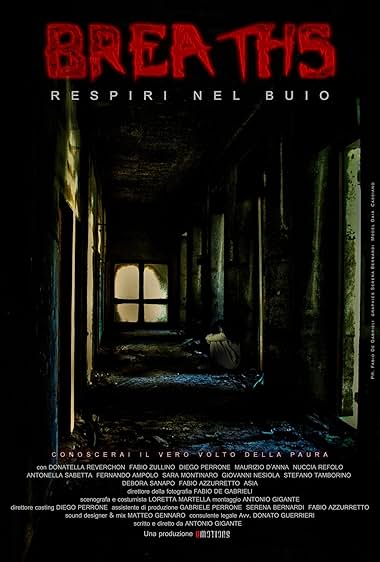
The hallway in our ranch-style house on Maple Street had always felt longer than it should have been, a narrow corridor lined with family photographs that never quite aligned. I was twelve when I first saw him, a tall man with a gaunt face and a grey suit that seemed to absorb the dim light of the nightlight. He walked back and forth, from the door of my parents’ bedroom to the door of mine, his footsteps silent on the worn carpet. I didn’t know his name, but I felt it in my bones: Mr. Holloway. He was not a ghost to be feared, at least not in the way the others had been. He was a presence, a constant pacing rhythm that matched the ticking of the grandfather clock in the living room.
My ability to see the dead was a lonely gift. I had grown accustomed to the spectral shapes of my departed pets—a border collie named Rex who would sometimes curl at the foot of my bed, a tabby cat called Marmalade who would purr from the windowsill. But Mr. Holloway was different. He seemed trapped, not in the house itself, but in that specific stretch of hallway, his eyes fixed on something I couldn’t see. He would pause at the midpoint, where the hallway opened to the new addition we’d built five years ago, and stare at the wall as if expecting a door to appear.
Our house was a 3-bedroom ranch, with a living room, a kitchen, a utility room, and two bathrooms. The addition, a larger living room we called ‘the den,’ had been built to accommodate my grandmother when she came to live with us, but she passed away before the walls were even painted. She was a warm woman, and her ghost had been a comforting presence, but now she was gone, and only Mr. Holloway remained in the hallway.
I was a chronic insomniac, and often I would find myself wandering the house at 2 a.m., when the silence was so thick you could almost touch it. It was during those hours that Mr. Holloway would be most active, his pacing growing more agitated. Once, I mustered the courage to speak, just a whisper: ‘Do you need help?’ He stopped and turned to me, his eyes hollow, his mouth open as if to speak, but no sound came. Instead, he pointed a long finger at the wall where the new den began, then resumed his pacing.
I was too frightened to linger, and I would retreat to my room, my heart pounding. I tried to tell my parents, but they dismissed my talks of ghosts as childish imagination. They had adopted me when I was three, and they never really knew how to handle my ‘gift.’ My dad would pat my head and say, ‘It’s just the house settling, sweetie.’ My mom would look at me with a worried frown and suggest I get more sleep.
Months passed, and the pattern continued. I grew braver, or perhaps more desperate. I started to sit on the floor at the end of the hallway, hugging my knees, just watching him. He would pace, and I would count the steps: twenty from one end to the other, a pause, then back. I noticed something peculiar: at the midpoint, his form would flicker, like a faulty lightbulb, and for a split second, I could see behind him a dark gap, as if the wall itself had a void.
One night, I decided to confront him fully. I stood in the middle of the hallway, blocking his path. He stopped and looked at me, his expression shifting from confusion to something like recognition. I asked, ‘What do you want?’ He opened his mouth, and this time a faint, wind-like voice emerged: ‘The door.’ He pointed again, more urgently, to the wall. ‘The door is here. But it’s sealed.’ I looked at the wall, which was a solid sheet of drywall, but I had a sudden, irrational urge to knock on it. I did, and it sounded hollow. I knocked again, listening, and realized that the wall behind the new den was not an original exterior wall—it was a new partition.
I spent the next days investigating. I searched the attic and the crawlspace, and I found an old blueprint rolled up in a box of my grandmother’s things. It showed the original floor plan of the house, and there was a small room between the hallway and the old living room—a room that had been sealed off when the addition was built. It was labeled ‘Storage,’ but it had a door that opened into the hallway.
The door had been covered over, the wall plastered smooth, and no trace remained. I realized that Mr. Holloway was not trapped in the hallway; he was trapped in that sealed room. He had been pacing because he was trying to find a way out, or perhaps he was guarding something in there. The dogs I had seen, including the one I never knew, they all seemed to gather at the midpoint, sniffing at the floor as if a scent emanated from behind the wall.
I knew I had to help him. But how? I couldn’t just punch a hole in the wall. My dad would lose his mind. One night, I woke to the sound of scratching. I tiptoed to the hallway and saw a spectral golden retriever, an old dog I’d never seen, pawing at the exact spot on the wall. I approached, and the dog looked at me with intelligent eyes, then disappeared. I knelt and pressed my ear to the wall. I could hear faint, rhythmic thumping, like a heartbeat. And then, a voice, very faint, said, ‘Let me out.’
I made a decision. I would open the wall. I knew my parents were leaving for a weekend trip, and I would have the house to myself. I gathered tools from the garage: a crowbar, a hammer, a utility knife. On Saturday, I went to the hallway and carefully cut a hole in the drywall, just above the baseboard, about the size of a football. As I pulled the drywall away, I exposed a wooden door, painted over, with a brass knob. The knob was tarnished, but it turned easily. I pushed the door open, and a rush of stale air hit me, along with the scent of dust and something sweet, like dried flowers.
Inside, the room was small and windowless. The walls were covered in faded wallpaper with a pattern of roses. In the center, there was a child’s rocking chair, still rocking gently as if someone had just stood up. On the floor lay a tarnished locket, which I picked up. It opened to reveal a picture of a young woman with a baby. On the back was engraved: ‘Edward and Edith, 1923.’
I realized then that this was Edward’s room, or perhaps the room where he had lost someone. I clutched the locket and stepped back. The hallway was suddenly colder. Mr. Holloway stood in the doorway, but his form was more solid than ever. He looked at the locket, then at me, and his face softened. He nodded once, and then he turned and walked into the room, and as he did, the door swung shut with a click. I tried to open it, but it was locked from the inside.
I never saw Mr. Holloway again. But now, sometimes, when I walk down the hallway, I feel a gentle brush of air, and I hear the soft click of a door closing. The locket is with me always, a reminder of the man who needed help but not in the way I thought. He needed to be remembered, and to be allowed to leave the space he was trapped in. The pacing stopped, but the hallway still holds a secret, and I am the only one who knows it.
As for the dogs, they still visit me from time to time, and one or two of them will sit at the midpoint of the hallway and wag their tails, as if waiting for a friend who finally came home.