Audio
 Shorts
 Movies & Games
 Blog & Stories
Our family never stayed in one place long enough to grow roots, but the year we moved into the estate at the edge of Caldwell was different. My father had been appointed to oversee a government project, and the house they gave us was a relic from another era: a sprawling colonial mansion with tall, narrow windows, a veranda that wrapped around the entire structure, and grounds that seemed to swallow the horizon. There was an old, rusted iron gate at the entrance, which we oiled and painted, not knowing that it would become a character in our story.
The house was perched on a hill, isolated from the nearest neighbor by at least a mile of overgrown fields. Behind the property, past the tennis court and the dried-up fountain, lay a vast, neglected garden that ended at a stone wall. On the other side of that wall was a small, private cemetery, still in active use, with fresh flowers and new headstones appearing every few weeks. The local townsfolk often took a shortcut through our grounds to reach it, and my mother, ever courteous, never complained. But at night, the path between our back gate and the cemetery was a ribbon of darkness, and I would watch from my window as mourners walked it, carrying lanterns, their silhouettes bobbing in the gloom.
I had just started university, and my routine was to study on the veranda until the small hours, laptop glowing, the chirping of crickets a constant lullaby. The veranda faced the road, and opposite that road, beyond a line of oleanders, was the cemetery. It was around 1 AM, in late autumn, when I first noticed the figure. A tall, thin man in a black coat, standing just inside the cemetery’s gate, as still as the marble angels around him. He wasn’t there when I looked earlier, so I figured he was a mourner, perhaps visiting a grave. But he stood without moving for over an hour, and I felt a chill snake down my spine. I closed my laptop and went inside, but I couldn’t shake the image.
The next night, he was there again, at the same time, in the same spot. This time, I watched him for two hours. He didn’t move, didn’t pace, didn’t seem to breathe. The security guard, an old man named Carlos, noticed my gaze and came over. ‘You see the gentleman too?’ he asked, his voice low. ‘He comes every night, at the same hour, stands by the gate, then leaves at dawn.’ I asked if anyone knew who he was. Carlos shrugged. ‘He keeps to himself. But there was an incident last month. A young woman from the town, she was found dead on the road right outside our gate. They say she was a skeptic, used to mock the figure. Now she’s buried in that cemetery.’ He crossed himself and walked away, leaving me with a knot in my stomach.
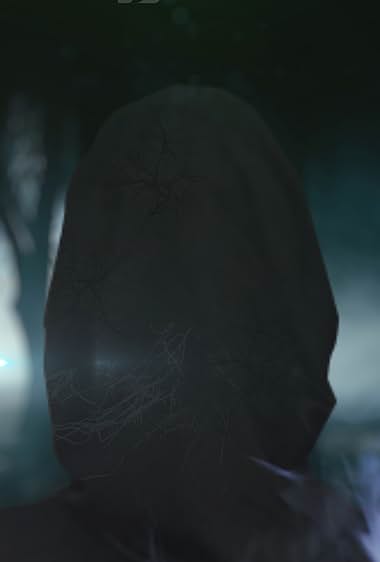
I couldn’t concentrate on my studies after that. I became obsessed with the man, or whatever it was. I started staying up later, watching him, noting how he never entered the cemetery, only stood at the gate. Sometimes, I thought I saw him looking at me, but his face was obscured by shadows. One night, I decided to get a closer look. I took my flashlight and walked down the driveway, past our iron gate, and across the road. The air grew colder as I approached. The oleanders rustled, though there was no wind. The man was still there, now just a few feet away. I called out, ‘Hello?’ No response. I moved closer, the beam of my flashlight illuminating his form. He had no face. It was a smooth, blank expanse of skin, like a mannequin. I stumbled back, my heart pounding. He didn’t move, but I felt a whisper in my ear, as if he had spoken to me from behind. ‘Don’t forget your promise.’ I ran all the way back to the house, locking every door, and didn’t sleep that night.
I tried to tell my parents, but they dismissed it as my imagination. The next day, my mother asked me to take some flowers to the cemetery for a neighbor’s relative. Reluctantly, I went, in the daylight. The cemetery was peaceful, birds singing, the sun warm. I found the grave and placed the flowers. As I turned to leave, I saw a fresh grave, a mound of earth with a simple wooden cross. The name on the cross was that of the guard, Carlos, who had spoken to me that night. I asked the cemetery keeper about it. He said, ‘Carlos died three days ago. Heart attack. Found him this morning near your gate.’ I felt a cold wave of terror. Carlos had been fine the night before. I hadn’t seen him in the daylight, but I realized I hadn’t seen him since that conversation two nights ago.
At midnight, I went back to the veranda, almost against my will. The man was there, but now he was on our side of the road, just outside our iron gate, as if waiting for me. I stepped closer to the railing, and he pointed a long, white finger at me. In my mind, I heard a voice, not spoken, but felt: ‘You have one week to find a replacement.’ I didn’t know what that meant. I stumbled inside, my mind racing. I tried to research the house’s history, but I found nothing but a local legend. The house was built on land that was once an execution ground. The gate was said to be the threshold between the living and the dead. The man was the warden, collecting those who had trespassed or broken a promise made at the gate. I had made a promise when we first moved in? No, I didn’t.
Days passed. Every night, I saw the man, always getting closer. By the third night, he was at the bottom of our porch steps. By the fourth, he was on the porch, staring at my window. I felt a growing dread, a heaviness in the air. I noticed strange things: my reflection in the mirror was a second late, the clock in the hallway chimed thirteen at midnight, and the iron gate, which we had oiled, began to rust again, as if aged decades in a week. My parents grew frantic, but they fell ill with a mysterious fever, confined to their beds. The servants left, one by one, until only I remained, alone in that monstrous house.
On the seventh night, I couldn’t move from my room. I heard the gate creak open, slow and agonizing. Footsteps on the gravel, then on the wooden floor of the veranda, then up the stairs. My door handle turned, but there was no one there when I looked. Then, from behind me, a whisper: ‘The gate must have a keeper. You have broken the boundary for seven nights. Now you take my place.’ I turned, and he was there, faceless, but I could see a grin etched into the void. He held out a key, old and iron, the same shape as ours. ‘You will stand at the gate from midnight to dawn, guiding the dead. Until someone else joins you.’ He vanished, and I was left holding that cold, heavy key.
Mornings after that night, I would find myself standing at the iron gate, the key in my hand, the cemetery across the road, and the villagers looking at me with a mixture of fear and pity. Some whispered that a new keeper had been chosen. I tried to leave, but every time I got close to the gate, I felt a pull, an invisible force that tethered me to that spot. The house became a prison, and I its warden. Now, my story is not meant to scare you but to warn. If you ever find an old iron gate at the edge of a sleepy town, and a house with a veranda overlooking a cemetery, do not approach. Do not make promises you cannot keep. Because the gate needs a keeper, and the dead are always watching, ready to claim a new soul.