Audio
Audio Shorts
 Movies & Games
 Blog & Stories
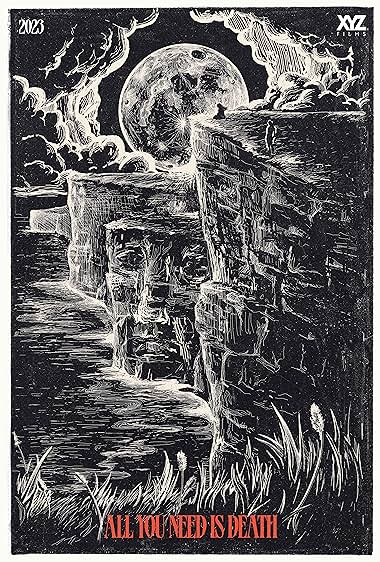
The granite boulders had stood in the Vembanad wetlands for as long as anyone could remember, but the old folk never spoke of them. They were just there, moss-covered and indifferent, like ancient sentinels watching over the backwaters. When the Menon family’s fortunes began to rot—their coconut palms withered, their daughter fell into a fever that no doctor could cure, and their youngest son drowned in a shallow pond—the villagers whispered that the boulders were cursed. But the Menons, in their desperation, did not listen to whispers. They listened to a wandering tantric who claimed that the boulders were the petrified remains of a forgotten Devi, and that her wrath had been kindled by neglect. The tantric said that if a temple were built over the granite, the family would be absolved, and prosperity would flow like the monsoon. The Menons, with their remaining gold and borrowed money, hired masons and laborers. They cut down the acacia trees that had grown around the boulders, and they built a small shrine, not out of devotion but out of fear. The locals, seeing the shrine rise, were relieved—a temple in the neighborhood meant protection, or so they believed. But the day the temple was consecrated, the boulders seemed to drink the vermilion and milk offerings, leaving only dark, wet stains. The priest, an old man with a tremor, noticed that the idol’s eyes—carved from a black stone—were not in the same position as they had been the previous night. He said nothing, but he began to chant louder, as if to drown out a sound only he could hear.
The temple grew, piece by piece, until it became a modest structure with a copper finial that glittered in the sun. The Menons’ fortunes did not reverse, but the family’s afflictions took on a new shape. The daughter’s fever broke, but she began to walk in her sleep, and at night, she would stand before the temple’s inner sanctum, her lips moving in a whisper that was not her own. The father, who had once been a robust man, developed a wasting disease that made his bones ache even in the heat. The villagers, hoping to earn the deity’s favor, began to bring their own offerings—coconuts, bananas, and incense. But the temple seemed to have a hunger that was not sated by these simple gifts. The priest, whose name was Narayanan, noticed that the incense smoke would sometimes curl into shapes—a hand, a claw, a face with too many eyes—before dissipating. He tried to leave, but he found that every path he took led him back to the temple, as if the granite boulders had grown roots that tethered him to the spot. The locals, too, began to report strange dreams: of a woman with a cracked skin, her fingers like the roots of a banyan tree, reaching down into their chests and pulling out their livers. But they dismissed these as nightmares, because the temple was supposed to be a blessing, and they had nowhere else to go.
One night, during a storm, the Menons’ oldest son, a sullen young man named Ravi, decided to confront the temple. He had always been skeptical, and he felt that the temple was a lie, a monument to his family’s desperation. He took a lantern and walked to the sanctum, where the idol loomed in the flickering light. He saw that the idol’s face was not the serene face of a goddess but a mask of anguish, and its lips were slightly parted, as if it were trying to speak. He leaned in closer, and he heard a sound like the grinding of stones beneath the earth. He felt a cold draft, and the lantern went out. In the darkness, he heard a voice, dry as a husk, that said, ‘You have forgotten me, but I have not forgotten you.’ Then he felt a pressure on his chest, and he was thrown back, landing on the stone floor. When he looked up, the idol’s eyes were now open, and they were not empty sockets but filled with a dark liquid that oozed like tar. Ravi scrambled to his feet and ran, but when he reached the temple’s threshold, he saw that the boulders outside had shifted, forming a kind of fence that enclosed the whole compound. He was trapped. He began to pound on the invisible barrier, but his cries were swallowed by the storm. The next morning, the villagers found Ravi kneeling before the idol, his lips blue, his eyes wide, and his fingers scraping at the stone floor as if he were trying to dig his way out. He was breathing, but he would not speak, and his gaze would not meet anyone’s. The Menons, fearing that they had angered the deity further, kept him at home, but at night, they heard him whispering in a language that sounded like the rattling of bones.
The temple, however, began to attract more devotees from other villages. They came with offerings, and they left with a sense of unease, unable to explain why they felt lighter but also hollow. One devotee, a woman named Lakshmi, brought her newborn son to be blessed. As the priest chanted, the baby began to wail, and his eyes fixed on the idol with a terror that seemed too intense for an infant. Lakshmi tried to comfort him, but he screamed and thrashed, and then he went limp. He was dead. The priest, his face ashen, told Lakshmi that the deity had taken the child as an offering, and that she should be grateful for the honor. But Lakshmi saw that the idol’s belly had swollen, and from its mouth, a thin strand of red thread hung, as if it had been chewing on something. She fled, screaming into the night, and the villagers, who had been so proud of their temple, began to avoid it. The temple, however, did not need them. It seemed to feed on the fear that emanated from the village. The granite boulders grew darker, and the soil around the temple turned black, and the plants that grew in that soil were twisted and bitter.
Years passed. The Menons moved away, leaving the temple to the parish, but no priest would stay for more than a week. The temple fell into disrepair, but it did not decay. The idol remained, and the boulders remained, and the air around the temple grew cold even on summer afternoons. The locals learned to walk a wide path around the compound, and they would not look at the temple for fear of seeing something that would make them forget their own names. But the temple was not done. It had a purpose, and it had waited long enough. One night, when the moon was a sliver, the temple’s doors burst open, and a swarm of black flies emerged, forming a funnel that rose into the sky. The flies descended upon the village, and they entered every house, every ear, every mouth. The villagers woke up unable to speak, their tongues lolling like dead fish. They stumbled to the temple, as if pulled by an invisible cord, and they knelt before the idol, which now had a human skin stretched over its granite face. The idol’s mouth opened, and it spoke in a voice that was the sound of granite grinding against granite: ‘You have fed me fear, and now I am full. But my hunger is eternal.’ Then the idol’s body cracked, and from the fissures, a thousand thin fingers emerged, reaching out to each villager. The villagers did not scream, for they had no voice. They were absorbed into the stone, their faces becoming faint impressions on the boulders, indistinguishable from the original carvings.
Today, the temple is gone. The boulders remain, but they have been smoothed by time, and they bear no trace of the hands that once carved them. The village is gone too, swallowed by the backwaters, and the only memory of the temple is a local legend, spoken in hushed tones, that if you listen closely to the rustling of the reeds, you can hear a chorus of whispers, all saying the same thing: ‘Do not forsake what you do not understand.’ But the whispers are not a warning. They are an invitation. And they are waiting for the next family that is willing to build something sacred on ground that was never meant to be hallowed.