Audio
Audio Shorts
 Movies & Games
 Blog & Stories
I never believed in the old tales, the ones my grandmother used to whisper about the Deepmire Fen. I chalked them up to superstition, the fanciful warnings of a rural community clinging to the past. But that was before I agreed to house-sit for my old friend, Marcus, in his newly purchased estate on the edge of that very fen.
Marcus, an entrepreneur with a taste for the macabre, had bought the ‘Harrowgate Manor’—a sprawling, Victorian relic that had stood empty for decades. He was called away on business to the coast, and I, ever obliging, said yes. The first night was blissful. I slept like the dead, a deep, dreamless slumber that felt more like a coma. I woke feeling rested, but a strange, lingering smell of damp earth and decay clung to the air, a scent I dismissed as old house musk.
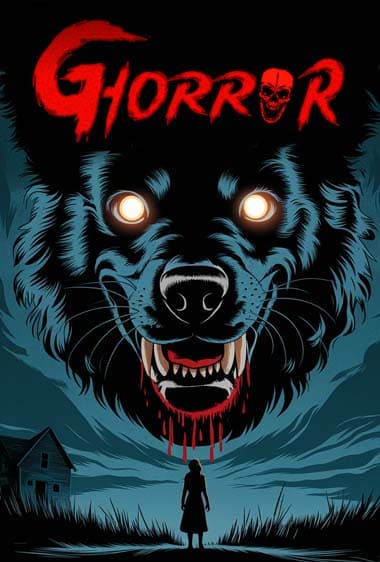
The second night was different. As dusk bled into the sky, an unease settled over me like a heavy cloak. The silence was too profound, too watchful. Sleep refused to come. I tossed and turned, every creak and groan of the old house amplified in my restless mind. Then, from the depths of the house, a sound began to rise—a low, guttural growl, not from a dog, but from something infinitely more primal. It emanated from the walls themselves, traveling through the plumbing and the floorboards.
The growl grew louder, a rhythmic pulsing that seemed to synchronize with my heartbeat. It was coming from the hallway, beyond my bedroom door. My heart hammered. Marcus had no pets. The sound was impossible. Yet there it was.
I forced myself out of bed, my legs like lead. I crept to the door, my hand hovering over the cold brass handle. The growl intensified, a vibration that shook the very air. Then, a howl—long, piercing, and inhuman—erupted from the other side. Simultaneously, scratch marks began to etch themselves into the wood of the door, as if massive claws were raking against it. The handle twisted violently, and the windows in the room rattled as if a tempest were outside, though the night was still.
Panic seized me. I threw myself against the door, bracing with all my weight. The scratching stopped. The growling died. A profound, suffocating silence returned. Then, a whisper, so faint it was almost a thought, slithered under the door: ‘Your debts are not forgotten.’
When Marcus returned three days later, I was pale, unshaven, haggard. I told him everything, my voice trembling. He listened without interruption, a strange, knowing look in his eyes. When I finished, he sighed and retrieved an old, leather-bound book from his study. ‘Marcus,’ I said, ‘this house is cursed.’
He opened the book to a page marked with a ribbon. The page was covered in strange diagrams and a map of the fen. ‘Every house has a history,’ he said. ‘Harrowgate Manor was built by a man named Silas Thorne, a cartographer who made his fortune by mapping the fen for the railways. But he destroyed sacred land to do it. The locals believed he made a pact with the Old Ones, trading his descendants’ souls for his success.’
He looked at me, his eyes grave. ‘I bought this house for a reason. I needed to map the fen again, to reverse the damage. But the spirits here demand a payment—a life for a life. They took my wife last year, and now they’re claiming everyone who stays here. I’m sorry, Tom. I didn’t think they’d reach out to you.’
My blood ran cold. ‘What do you mean, a life for a life?’ I whispered. He didn’t answer. He just handed me a folded map, old and yellowed. ‘There’s a stone circle in the center of the fen,’ he said. ‘At the base of the central stone, you’ll find a hollow. Place a drop of your blood inside the hollow as an offering. Do that, and you’ll be free.’
I stared at the map, my mind reeling. ‘But why would you tell me this now?’ I demanded. ‘Because you stayed here,’ he said. ‘The house has marked you. You’re part of the debt now.’
I spent the next week in a feverish haze, unable to sleep, feeling the walls closing in. I finally decided to follow his instructions. I drove to the fen at midnight, the headlights cutting through the mist. The stone circle emerged from the darkness like teeth. I walked to the central stone, trembling, and pricked my finger with a knife. As the blood dripped into the hollow, I felt a cold breath on my neck. I turned around, but there was nothing—only the silent, ancient stones.
When I returned to the house, Marcus was gone. A note on the table read: ‘I’ve paid my debt. Good luck.’ The house was empty. I packed my things and left, vowing never to return.
But it didn’t end. I still hear the growls sometimes, at night, in my new apartment. I see the scratches on my door. And I know, with a certainty that chills me to my bones, that the debt is not paid. It’s only beginning to collect.